Table Of Content
After Vasilisa has done all of the witch's tasks to her liking, the girl works up the courage to ask the Baba Yaga who these riders were. The Baba Yaga reveals that the white, red, and black riders were the day, the sun, and the night, respectively, all of whom she refers to as her faithful servants. Sure, Baba Yaga is Russian, she's scary, and she wants to eat you, but there's so much more. How do you know when you've found a Baba Yaga and not just a generic forest witch? Is she definitely going to eat you, or might she instead play the role of a beneficent yet still vaguely sinister mother figure?
Ways to Work With the Old Woman, Baba Yaga

And is surrounded by a fence made from human bones with a lock on her gate made from the sharp teeth of a human jaw. She has disheveled hair and a sometimes iron nose that is so long she can lie down on the floor of her hut and it could touch the ceiling. Baba Yaga was once more goddess than witch who reigned over time, life, death, and the elements. Today, she is most commonly depicted as an ugly evil witch, but that wasn't always her story. Since Baba Yaga rejects just about every societal norm in the book, this is precisely what makes her so fascinating to many people as both a villain and a mysterious fairy godmother character. But at the heart of it, she also represents an evergreen reminder for people to watch out for themselves in a dangerous world — and to not stray too far from safety.
Skin-walkers: Nightmare Witches from Navajo Myth
Her influence can be seen in various aspects of popular culture, entertainment, feminist perspectives, and interpretations in modern works. Within the tales of Baba Yaga, we find a series of challenging tasks that Vasilia must navigate. These tasks often appear impossible and require her resourcefulness and courage to overcome.
Death’s companion
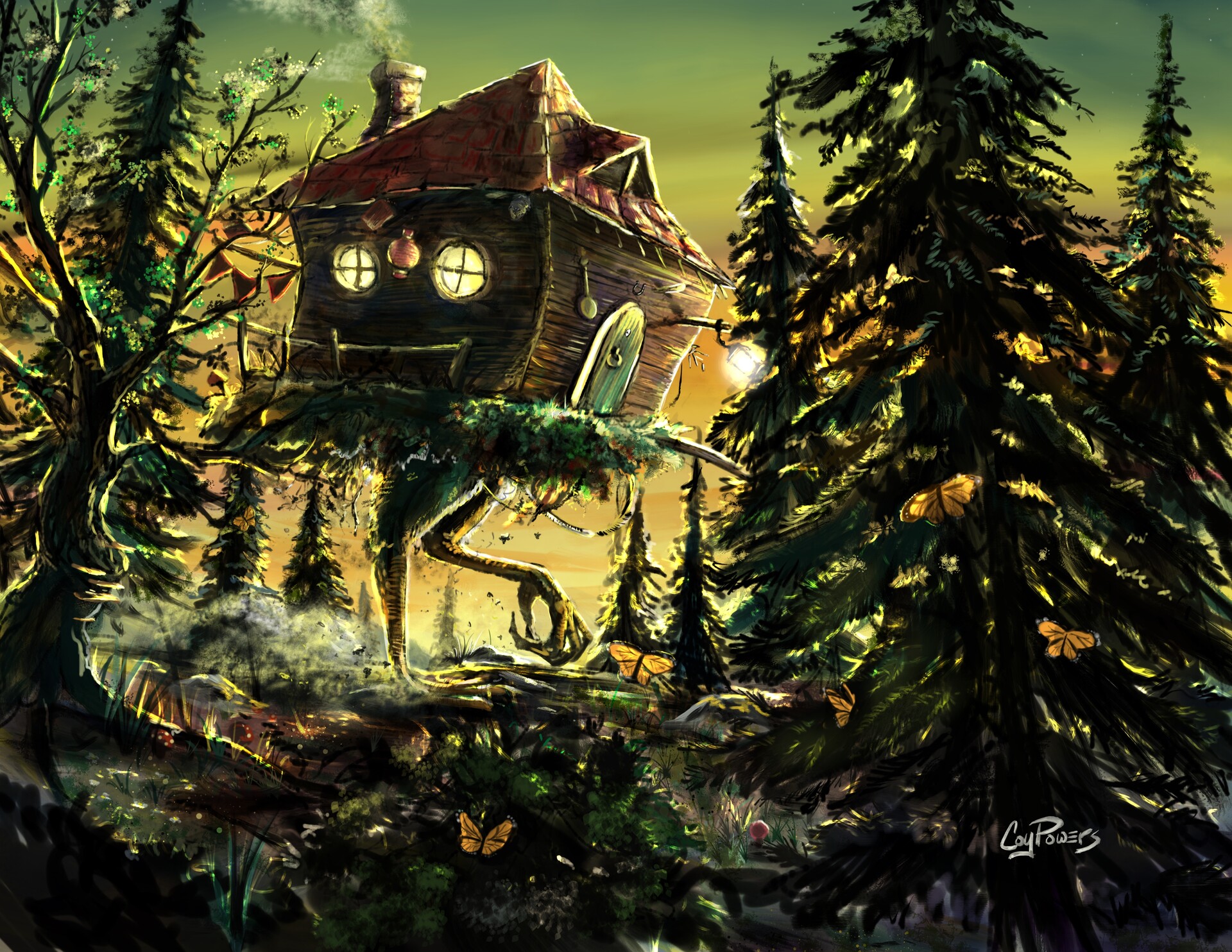
Its most striking feature is its peculiar foundation – enormous chicken legs. Another very famous possession of Baba Yaga is her enchanted mirrors that are believed to turn into lakes of water. An alternative to her flying mortar is the flying carpet that she uses to great and terrifying efficiency. This old witch in Slavic folklore also has fire-breathing horses in the stable of her house.
This feature of hers allows her to crash the bones of her victims with her bare teeth. Baba Yaga’s name is mentioned in Russian scientist and poet Mikhail V. Lomonosov’s 1755 grammar book titled Rossiiskaia grammatika. In the book, the character Baba Yaga (Iaga baba) is mentioned twice as the author tries to find the equivalents of Roman gods in Slavic pantheon. Mikhail, perhaps not regarding Baba Yaga as a full-fledged deity, does not give the witch any counterpart in the Roman pantheon. Baba will take you on a road to initiation deep in her forest.
One of the surest signs that you've encountered the Baba Yaga is her house. It's one of those "you definitely know it when you see it" kind of things. You might, for example, be unsure about whether the house you saw was actually made of gingerbread, or if that spooky house on the corner is actually haunted. In this tale, as in others such as The Frog Princess and Maria Morevna, Baba Yaga acts as the catalyst for transformation.
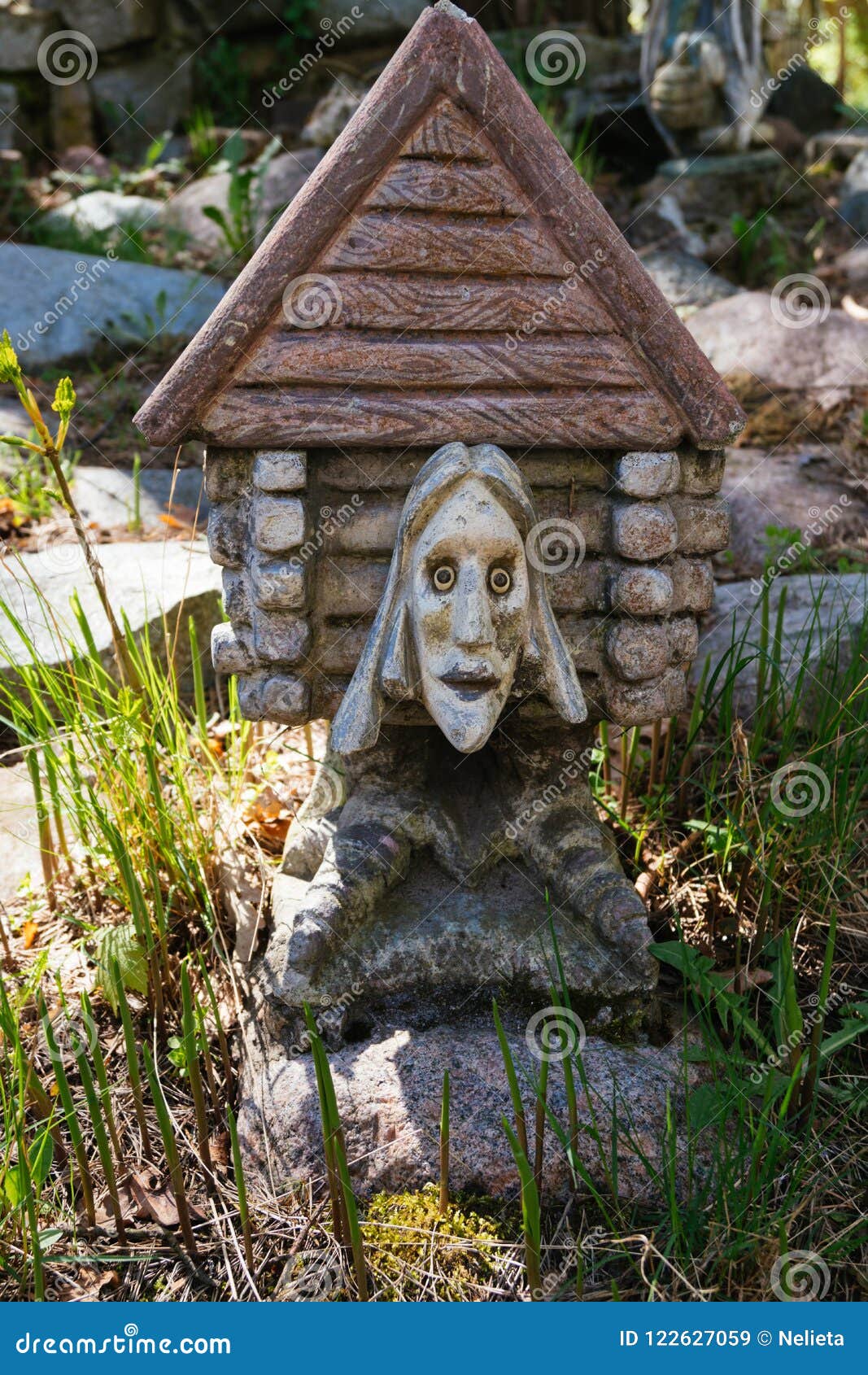
The House with Chicken Legs
The heroes and heroines in these Baba Yaga tales carry over from the folklore because of problem solving, hard work and courage they exhibit. Attempts to explain Baba Yaga in the 18th century actually make this association with ancient Slavic deities as well, including early indications that she was a pagan goddess. But "Yaga" is most commonly interpreted as Baba witch, old granny witch, or evil Baba. In modern usage, Baba is a derogatory term designating a difficult old woman, which could be connected to the image of the Baba Yaga. While there are variations, the word "Baba" originally referred to a married peasant woman of childbearing age or older.
And just like in the story of Cinderella, Vasilissa's new stepmother and sisters are far from kind, jealous of her goodness and her beauty. Later, a Russian illustrator used this collection to create some of the most famous renderings of Russian folk characters, including this one of the Baba Yaga in 1899. The powerful Yaga always live somewhere remote, usually in a deep forest. Like many other legendary witches, Baba Yaga enjoys roasting and eating her victims in her house, where she keeps an enormous oven. Ivan Bilibin/Wikimedia CommonsBaba Yaga is said to be a witch with magical powers. One of the most well-known stories involving Baba Yaga is the tale of Vasilia the Beautiful.
More From the Los Angeles Times
In terms of infamy, there are very few characters in Slavic mythology that could boast of having a more intriguing appeal than Baba Yaga. When translated into English, Baba Yaga’s name means “grandmother” or “elderly woman”. For many centuries, the tales of Baba Yaga have been used to frighten children, more often done by adults as a last resort to get children into behaving properly.
We will explore the lessons and reflections that can be derived from Baba Yaga’s tales, including the themes of transformation, self-discovery, and the balance between light and darkness. Baba Yaga’s connection with nature and the supernatural highlights her role as a primal force in the world. As the guardian of the water of life and a wielder of natural elements, she represents the untamed power of the natural world and serves as a link between the human and the divine.
"A Tale Both Old and New": Finding Baba Yaga by Jane Yolen - Reactor - Tor.com
"A Tale Both Old and New": Finding Baba Yaga by Jane Yolen - Reactor.
Posted: Tue, 30 Oct 2018 07:00:00 GMT [source]
However, others claim that this legendary witch is more complex, especially since she’s been featured in numerous different stories in different ways. The chicken legs symbolize mobility and unpredictability, giving Baba Yaga the ability to move swiftly across the land. This element of transformation encapsulates her mysterious nature and adds to the aura of danger surrounding her dwelling. Discover the eerie physical appearance of Baba Yaga, which often includes a nose as long as Pinocchio’s and unbreakable iron teeth.
When Vasilisa wakes in the morning and sees the firelit dim inside the skull-topped fence posts, she spies a rider dressed all in white galloping upon a milk-white horse around the house. Soon she spies a rider in red on a blood-red horse who does the same. In the evening, when the Baba Yaga returns to check on Vasilisa's work, the girl sees a rider in black on a coal-black horse galloping around the hut before vanishing like the others. Baba Yaga, in Slavic folklore, an ogress who steals, cooks, and eats her victims, usually children. A guardian of the fountains of the water of life, she lives with two or three sisters (all known as Baba Yaga) in a forest hut that spins continually on birds’ legs.
The eyes and the skulls begin to shine, lighting the clearing as if it were day. Next, a man in red riding a red horse behind whom the sun rises. Scared of being eaten by Baba Yaga, Vasilissa consults her doll. One night, Vasilissa and her stepsisters are working by candlelight when a stepsister purposely snuffs out the light and then instructs Vasilissa to go to Baba Yaga's hut for a new flame. On her death bed, a merchant's wife gives a doll to their only daughter, Vasilissa, telling her that she must always keep the doll with her. But this girl chases the mice with a rolling pin and doesn't do any of the work required of her, so Baba Yaga breaks her into pieces and puts her bones in a box.
While originating from Eastern Europe, variations of the Baba Yaga character can be found in folklore from other parts of the world. In old Slavic communities, it is likely that the tales of Baba Yaga featured often whenever folktales (Skazka) are told during feasts, dinners, or weddings. During the hay days of the Soviet Union, Baba Yaga stories were used as a form of socialist propaganda, as traits such as problem solving, hard work, and courage featured prominently in the themes of Baba Yaga stories. In some of the tales which were collected in the 19th century by Russian folklorist Alexander Afanasyev, Baba Yaga dies in the end; however, she rises again, leaving many to believe that she might be immortal. Similarly, it’s been said that she is the companion of death on his numerous travels. Baba Yaga’s set of teeth is long and is believed to be made of iron.
Her name is often understood to mean "Grandmother Witch", though this is challenged and there is no universal agreement on the meaning of Yaga. She is first mentioned in a book on Russian grammar in 1755 but is thought to have existed in the oral tradition of Slavic folktales much earlier. Although she is usually the villain of any piece she appears in, she can also offer assistance and is understood as more of a trickster character who encourages transformation than the stock figure of an evil witch.




No comments:
Post a Comment